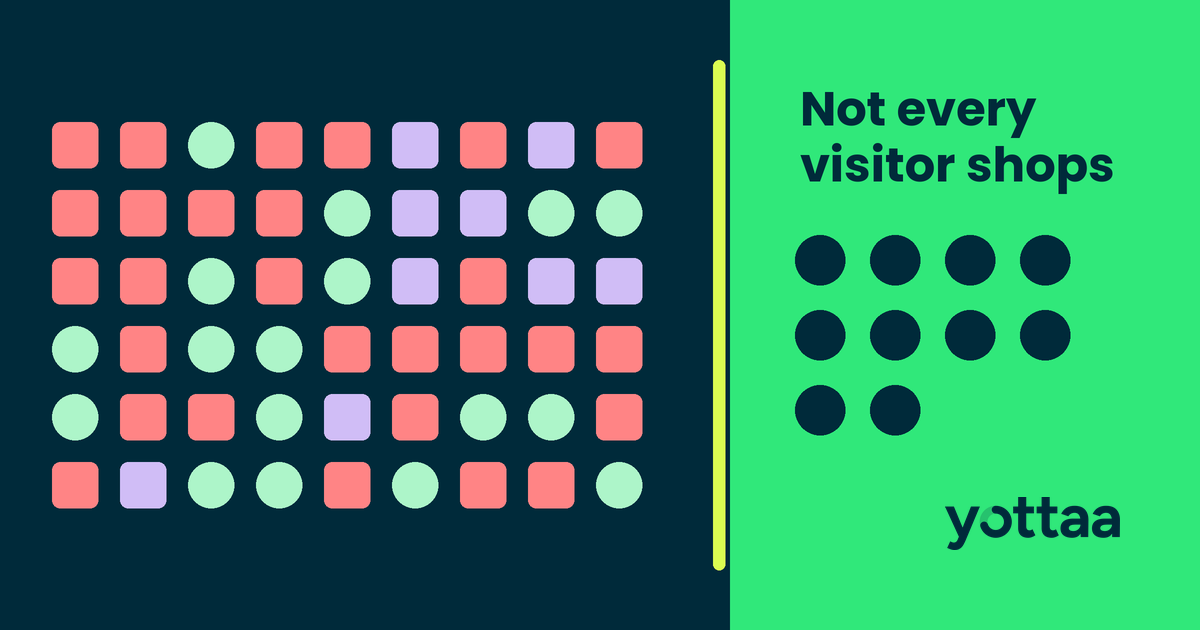




Shoppers arriving via AI engines are significantly more likely to land directly on product detail pages rather than home or category pages, bypassing the traditional eCommerce funnel entirely.
This isn’t a future trend. Yottaa’s 2025 Cyber 5 data confirms it’s already happening at scale. And it’s fundamentally changing which pages carry the most revenue risk.
For years, eCommerce teams optimized performance around a familiar model. Shoppers arrived through paid search, organic listings, or email campaigns. They landed on a category page or homepage, browsed, and gradually moved toward a purchase.
That model is now changing. AI-powered discovery tools, recommendation engines, and shopping agents are increasingly shaping how shoppers find products. Instead of navigating a site step by step, more shoppers are arriving directly on product detail pages (PDPs), often with higher intent and less patience for friction. As a result, PDP performance now carries more revenue risk than ever before.
How AI Compresses the Discovery Funnel
AI is altering the top of the funnel by compressing decision-making.
Large language models, AI-powered search experiences like Google’s AI Overviews and ChatGPT shopping recommendations, and recommendation systems increasingly summarize options, compare products, and direct users to a specific result. In many cases, that result is a PDP, not a homepage or category page.
Google has already begun integrating AI-generated answers into search results, changing how users discover and select products before they ever reach a retailer’s site. These experiences reduce exploration and increase the likelihood that the first page a shopper sees is the product itself.
This shift means PDPs are no longer just part of the journey. They are often the journey.
Why PDP Performance Risk Is Higher in the AI Era
When shoppers arrive directly on a PDP from an AI recommendation, two things change simultaneously:
Intent is higher: They’ve already narrowed their options before arriving. The PDP is confirmation, not exploration.
Patience is lower: AI-driven experiences train users to expect instant answers. If the PDP doesn’t load quickly and become interactive immediately, shoppers don’t browse elsewhere—they return to the AI interface and choose a different product.
This creates a shorter, less forgiving recovery path. Performance issues that might have been tolerated deeper in a traditional funnel now appear immediately at the moment of highest intent.
Yottaa’s Web Performance Index data shows that at just 4 seconds of load time, bounce rate reaches 66% while conversion sits at 1.01%. As AI-driven discovery sends higher-intent traffic straight to PDPs, any delay in load time, interaction readiness, or visual stability directly increases the risk of lost revenue.
Why PDPs Are More Performance-Sensitive Than Other Pages
Product detail pages are inherently complex. Yottaa data shows that modern PDPs average more than 25 third-party tags, with each additional script introducing new dependencies, execution order risk, and network sensitivity. They often include high-resolution images, dynamic pricing, personalization, reviews, recommendations, analytics tags, and more. Many of these elements load asynchronously and compete for execution time in the browser.
At the same time, PDPs are where Core Web Vitals are most likely to be stressed:
- Largest Contentful Paint can be delayed by hero images and media-heavy layouts.
- Interaction to Next Paint could be affected by JavaScript-heavy personalization and third-party scripts.
- Cumulative Layout Shift may spike due to late-loading components like reviews or promotions.
Google’s Core Web Vitals documentation makes clear that these metrics are closely tied to real user experience, especially on content-rich pages.
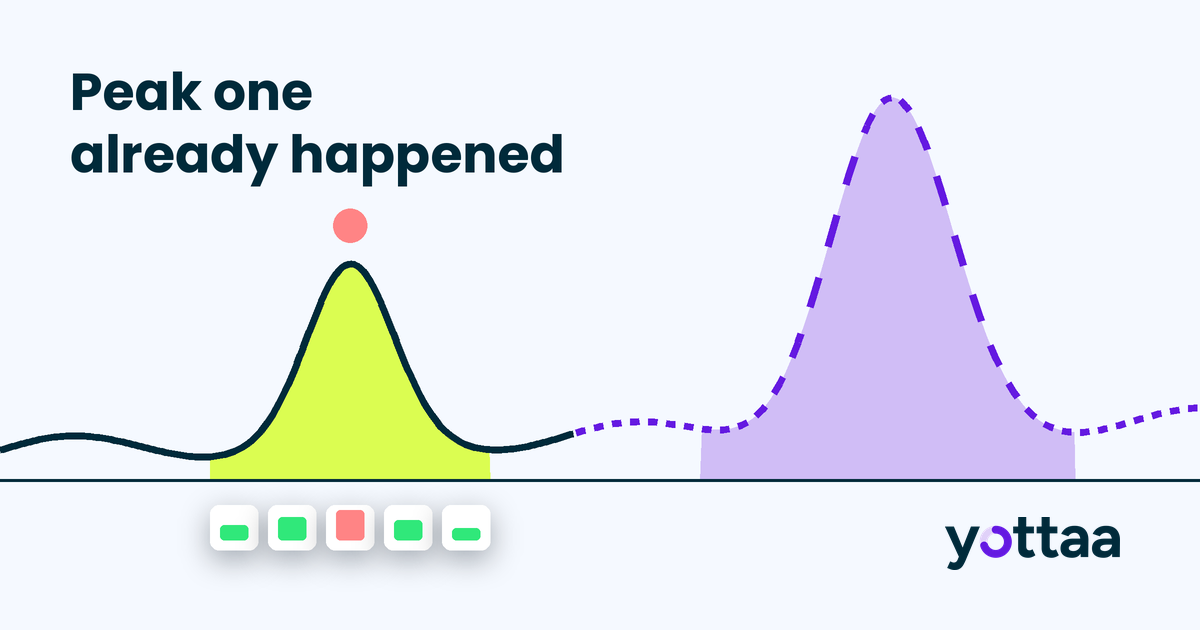
It’s not just where shoppers land — it’s when they arrive. Yottaa’s 2025 Cyber 5 analysis shows AI usage peaking during late-night hours, when shoppers are comparing options or ready to purchase after absorbing campaign messaging earlier in the buying process.
These sessions don’t align with traditional peak traffic assumptions or campaign schedules. They arrive asynchronously, often without the signals teams have traditionally relied on, making real-time performance monitoring even more critical.
What Performance Signals Matter Most on PDPs Now?
As PDPs become the primary entry point, certain performance signals matter more:
- Time to visible product content, which affects perceived speed and trust
- Interaction readiness, especially for variant selection and add-to-cart actions
- Visual stability during initial load, which influences confidence and usability
These signals align closely with Core Web Vitals, but they also extend beyond aggregate scores. Teams need to understand how performance behaves on PDP templates, across devices, and under real-world conditions.
Understanding how PDP performance affects revenue requires more than generic speed scores. Teams need to identify the performance range where shoppers actually convert — what Yottaa calls the Conversion Zone — and monitor whether real sessions stay within that range.
Why Traditional Monitoring Misses PDP Performance Risk
Many performance tools still emphasize site-wide averages or synthetic tests.
That approach can mask issues that disproportionately affect PDPs, especially when problems originate outside the browser. CDN behavior, cache efficiency, backend response time, and third-party execution all influence PDP performance, but they are often analyzed separately. As traffic becomes more PDP-centric, these blind spots translate directly into revenue risk.
This creates a performance paradox: PDPs are becoming both more important (as primary entry points) and more fragile (with dozens of third-party tags and complex execution paths). The question is no longer whether to prioritize PDP performance, but how to gain the visibility needed to protect it.
AI-driven traffic also blurs the line between beneficial shoppers and automated threats. Teams now need clear policies for which AI agents can browse PDPs, create accounts, or complete transactions — making performance and security inseparable concerns.
Without proper agent governance, retailers risk either blocking valuable AI-driven traffic or allowing uncontrolled automation to distort performance and compromise trust.
What Does This Mean for Different Teams?
The shift in how shoppers arrive changes what teams should prioritize. PDPs should be treated as primary landing experiences, not secondary pages. Performance analysis should focus on real user behavior, delivery-path context, and variation across devices, geographies, and traffic sources.
Most importantly, teams should reassess how quickly they can detect and diagnose PDP performance regressions. In 2026, as AI shopping behavior becomes the norm, product detail page optimization strategies must evolve from nice-to-have to mission-critical. In an AI-shaped funnel, delays are not just technical issues. They are lost opportunities that rarely come back.
In summary:
For Marketing: Campaign success now depends on PDP performance. AI-driven traffic arriving during late-night hours with high intent won’t wait for slow loads.
For Engineering: Site-wide performance averages no longer tell the story. PDP-specific monitoring across real devices, networks, and third-party execution paths is critical.
For eCommerce Leaders: Revenue risk has shifted. The pages that matter most are now the most complex—and the least visible with traditional monitoring.
Why This Shift Matters Now
AI is not a future consideration for eCommerce discovery. It is already reshaping how shoppers find and evaluate products.
As that shift accelerates, PDP performance becomes one of the most critical determinants of conversion and revenue. Pages that load slowly, shift unpredictably, or respond sluggishly at the moment of intent will increasingly be filtered out, not by human patience, but by AI-driven decision loops.
Ready to adapt your performance strategy for the AI era? The 2026 Digital Performance Outlook explores how AI is reshaping eCommerce performance requirements and what leading brands are doing to stay ahead.
Download the report to discover:
- How AI-driven traffic patterns are changing performance priorities
- Why third-party sprawl on PDPs creates compounding revenue risk
- The visibility gap that’s hiding up to 30% of your user sessions
- How to unify performance, security, and AI readiness
Subscribe to our blog

Performant Experimentation – A Guide to A/B Testing
Every A/B test you run is a purchase. You’re buying information—an answer to a hypothesis—and you’re paying for it in degraded performance and lost conversion during the test window.
Download eBook