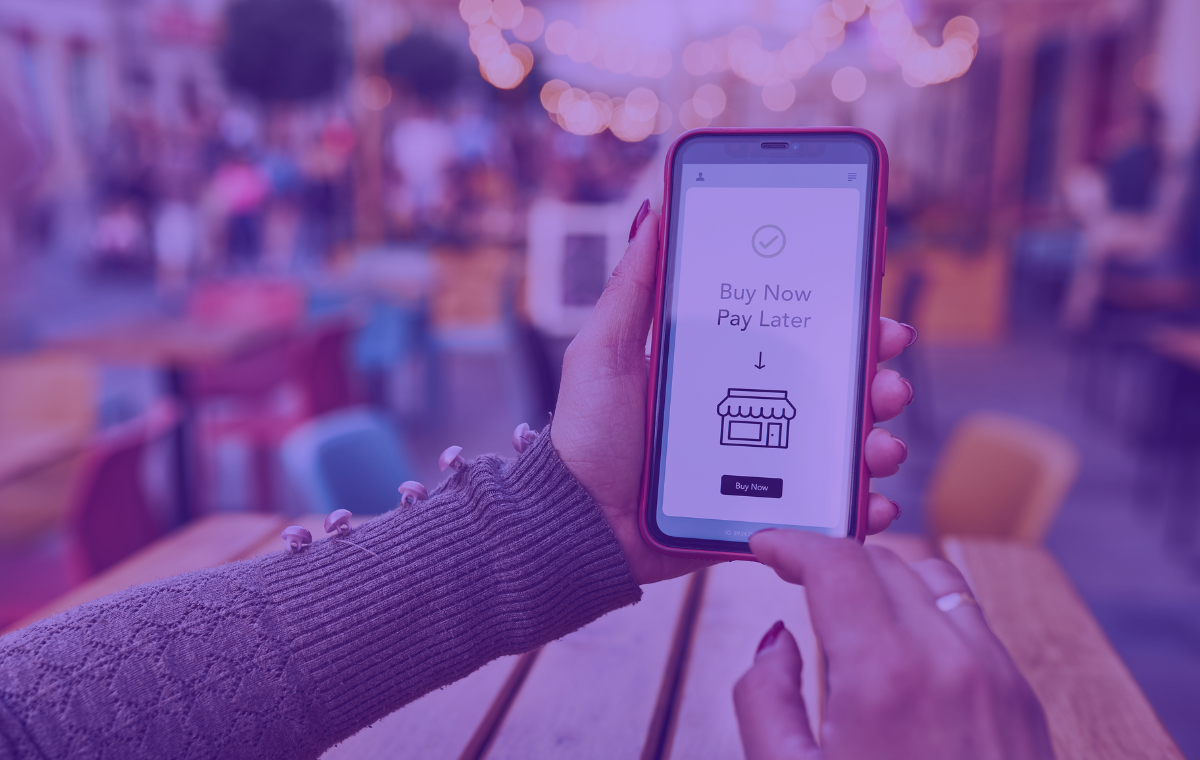



Buy Now Pay Later (BNPL) has evolved from a holiday checkout perk into a mainstream way to shop online. What began as an alternative for high-ticket items has quickly become a standard payment method across retail categories, from fashion and electronics to everyday essentials.
For many shoppers, BNPL offers predictability and convenience at a time when traditional credit feels less accessible. For retailers, it’s a proven conversion driver that helps customers complete purchases they might otherwise delay. In 2025, its presence in the eCommerce landscape is impossible to ignore.
Buy Now Pay Later by the Numbers
Across major retail sites, BNPL adoption continues to climb. Roughly half of leading eCommerce brands now feature at least one installment option at checkout, according to Morgan Stanley, and about 60% of U.S. shoppers have tried it. The model accounts for roughly 5–6% of all eCommerce transactions, representing more than $500 billion in annual global spending.
In the U.S., analysts estimate BNPL purchases will reach $122 billion in 2025, up nearly 11% year over year. That growth isn’t coming only from large-ticket purchases; smaller average order values show that consumers are also using BNPL for everyday spending. Younger demographics, especially Gen Z and millennials, continue to drive much of this activity.
The result is a payment method that’s no longer seasonal or niche. BNPL fueled $18.2 billion in online holiday sales in 2024 and is projected to reach $20.2 billion this season. But while holiday peaks remain important, the bigger story is consistency: shoppers now expect flexible payment options year-round, and brands that don’t offer them risk falling behind.
What the Web Performance Index Reveals
As retailers expand their tech stacks, each new third-party app can affect page load time. Yottaa’s Web Performance Index (WPI) analyzes how thousands of these integrations perform in real-world storefronts, providing clear visibility into what helps or hinders site speed.
The latest WPI data shows that BNPL apps generally perform well within modern eCommerce environments:
- Of the 8 BNPL and installment apps monitored, 7 are rated green, meaning they have minimal impact on page performance.
- The most widely used provider, Affirm, earns a yellow rating, reflecting a moderate slowdown across some sites, yet it appears on 31% of tracked storefronts.
- Across all categories, third-party technologies account for roughly 44% of total page load time, underscoring the importance of monitoring every vendor’s performance footprint.
- Pages taking longer than 4 seconds to load lose over 60% of shoppers, according to Yottaa’s benchmarks.
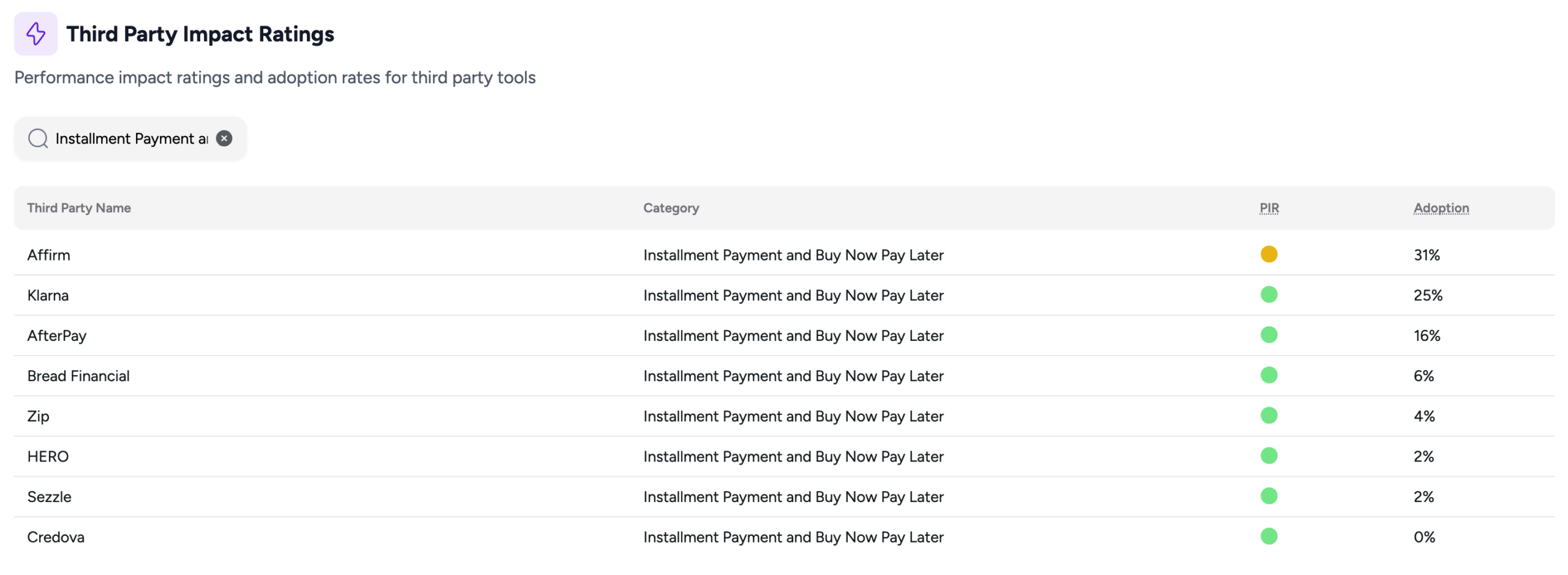
Despite those risks, the BNPL category overall maintains a positive Performance Impact Rating (PIR) — a clear sign that these integrations are not introducing major delays or disruptions during checkout.
The Performance Takeaway
Buy Now Pay Later has become a key feature of the online shopping experience. Yottaa data confirms that most installment payment tools can coexist with high-performing sites when properly managed.
Yottaa’s VP of Performance Consulting, Shawn O’Neill, recently sat down with eCommerce pro Linda Bustos to discuss the impact of BNPL on websites. Watch the video for more insights on these apps and what brands can do to avoid performance slowdowns.
For brands, that means flexibility no longer comes at the cost of speed. As long as performance is continuously measured and partners are chosen with PIR data in mind, retailers can deliver fast, seamless checkout experiences that convert.
Yottaa’s Web Performance Index shows that the path forward is balance — giving shoppers more ways to pay without adding friction to the journey.
Subscribe to our blog

Performant Experimentation – A Guide to A/B Testing
Every A/B test you run is a purchase. You’re buying information—an answer to a hypothesis—and you’re paying for it in degraded performance and lost conversion during the test window.
Download eBook