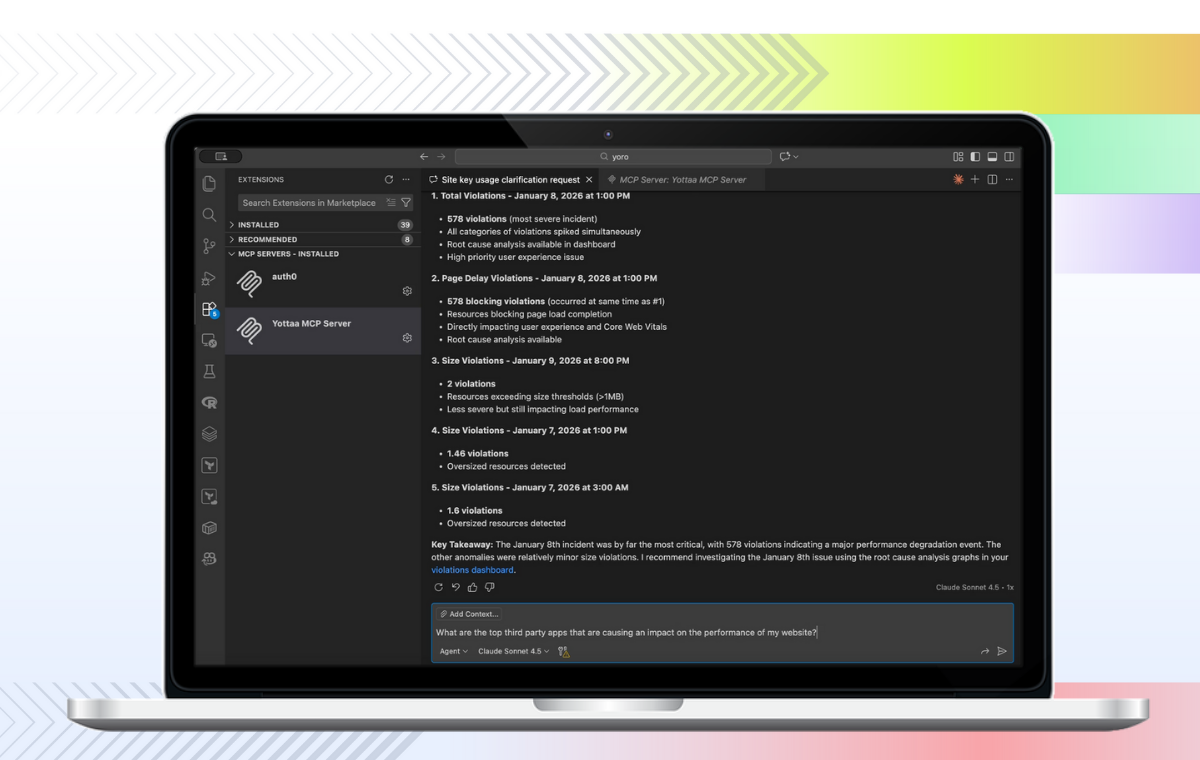
AI agents are quickly becoming part of everyday development. They can read code, answer questions, and help teams troubleshoot faster. But when it comes to understanding what’s happening in production — especially on the front end — most agents still lack the context they need.
Performance data is spread across dashboards or isolated in browser DevTools, while business impact lives somewhere else. Developers are left context-switching between tools just to answer basic questions.
The Yottaa Model Content Protocol (MCP) Server changes that by making real user web performance data accessible to AI agents directly inside developer workflows. Designed to bring live, structured performance data into developer workflows, Yottaa MCP enables AI agents and IDEs to query production performance directly — changing how teams identify and act on issues like regressions, JavaScript errors, Core Web Vitals shifts, and third-party impact.
Bringing Real User Performance Into the Development Flow
When performance issues show up, teams rarely struggle to find a metric. They struggle to understand the full picture.
- Was there a Core Web Vitals regression?
- Did JavaScript errors spike?
- Did traffic or conversion shift at the same time?
Answering those questions typically requires hopping between tools, digging through waterfalls, and correlating changes by hand. That workflow does not translate well to AI agents, which need structured, reliable access to context.
Just as importantly, this work rarely happens where developers are actually fixing the problem, slowing time to resolution. For eCommerce sites, that delay often means prolonged shopper friction and lost sales.
What the Yottaa MCP Server Is
The Yottaa MCP Server is a remote, cloud-hosted MCP server that exposes real user web performance (Real User Monitoring, or RUM) and conversion data through purpose-built tools with consistent schemas.
Instead of forcing AI agents to navigate raw endpoints, MCP gives them defined tools they can call reliably. Yottaa provides those tools for investigating performance, including Core Web Vitals, page-level metrics, anomalies, JavaScript errors, third-party impact, and session behavior.
Every response is structured JSON. That means the same queries can support interactive investigation, automation, and AI-assisted workflows.
For eCommerce sites with conversion tracking, the data can also be tied directly to conversion and revenue impact, grounding technical decisions in business outcomes.
Example: Pinpointing Regressions With Anomaly Detection
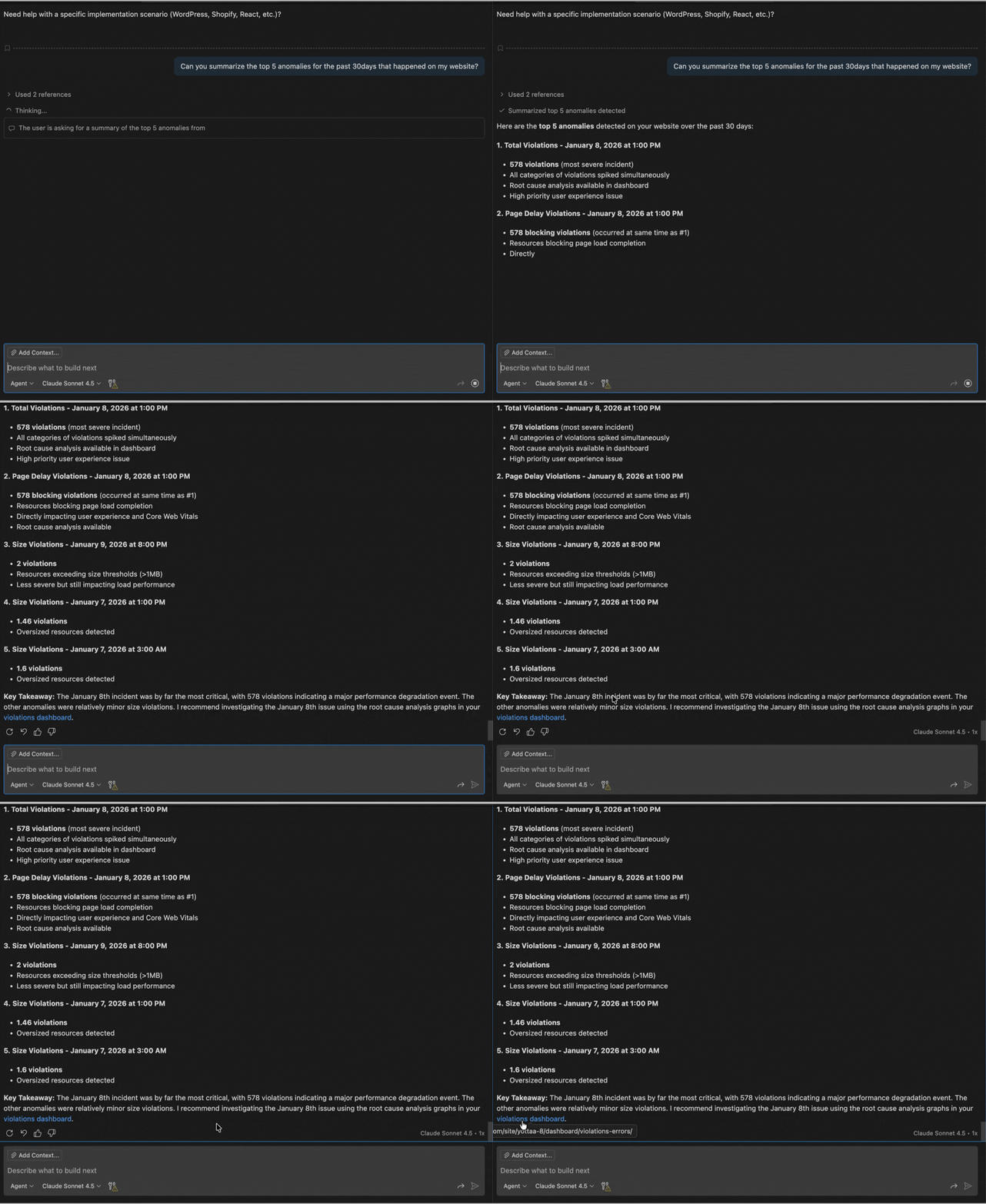
When site performance regresses, teams need to know when it started and how serious it is.
With the Yottaa MCP Server, a developer can ask their AI tool to surface recent performance anomalies instead of relying on vague alerts. Each anomaly includes the affected category or metric, severity, baseline and current values, and an exact onset timestamp.
That makes it easy to quickly identify the most critical regressions, understand whether multiple issues occurred together, and correlate changes with releases, configuration updates, or traffic shifts — without scanning broad date ranges or dashboards.
Example: Understanding Whether Traffic and Conversion Shifted Together
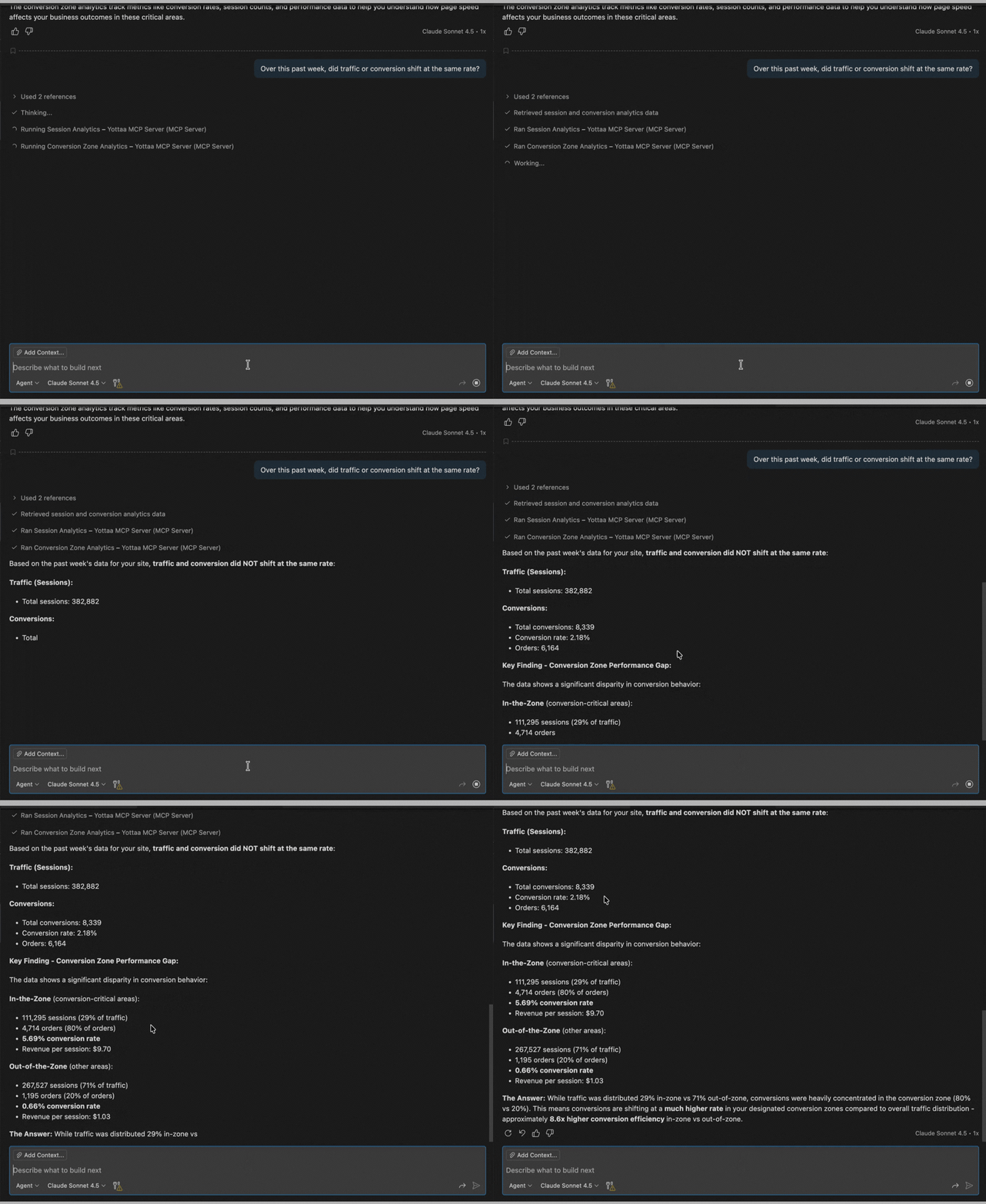
When performance or conversion drops, one of the first questions teams ask is simple: did traffic change, or did shopper behavior?
With the Yottaa MCP Server, a developer can ask their AI tool to pull session trends like traffic volume, conversion rate, and revenue metrics into a single time series.
From there, the agent can surface how those changes align with the site’s Conversion Zone — the performance thresholds where shoppers are most likely to convert — showing whether traffic is falling inside or outside the optimal range. Because these metrics share the same timestamps, it’s easy to see whether traffic and conversion moved together or diverged.
Example: Identifying Third-Party Impact as Part of Performance Diagnostics
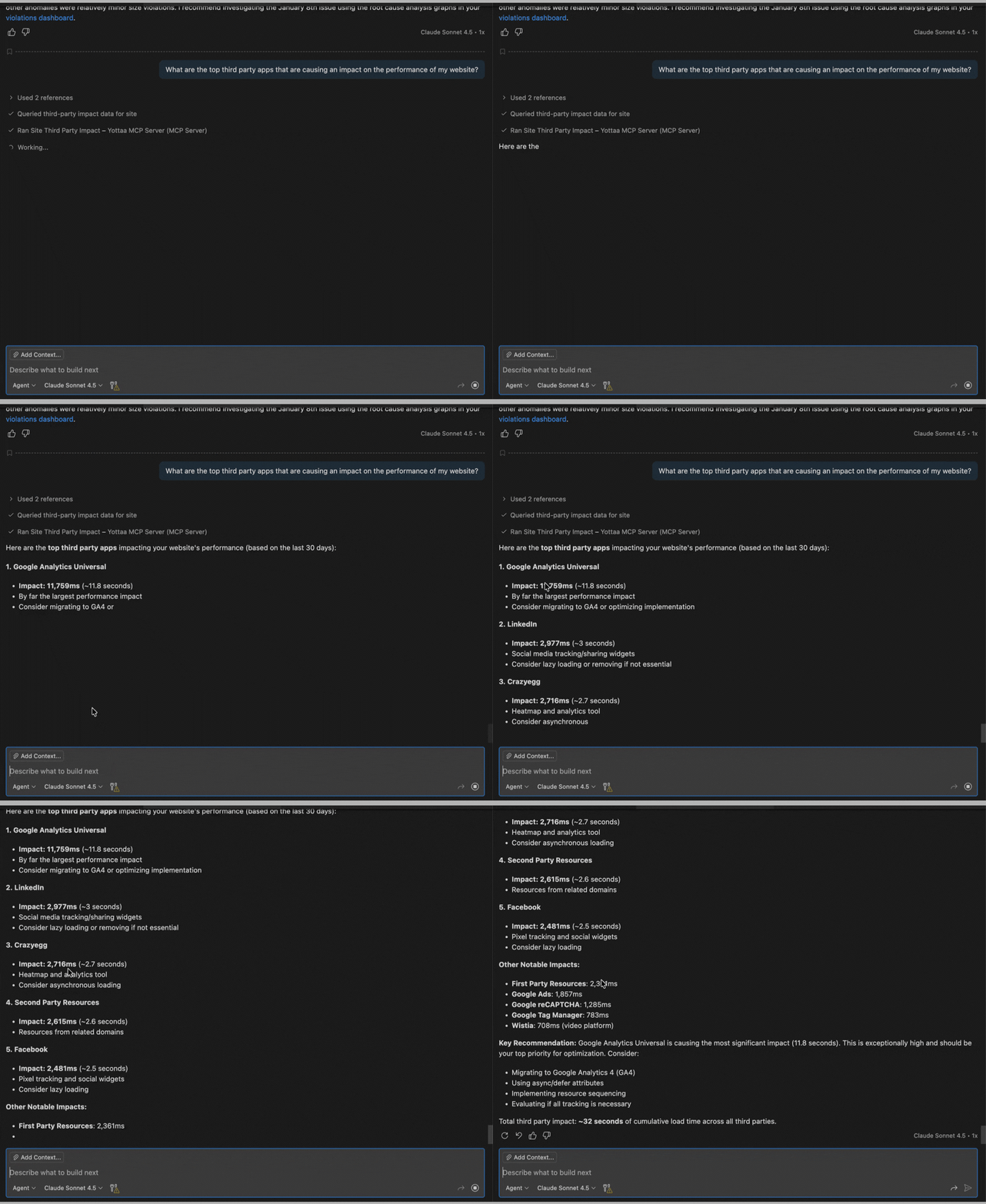
Modern eCommerce sites rely on dozens of third-party scripts. They are essential, but also a common source of performance regressions and shopper friction.
When queried, the Yottaa MCP Server surfaces third-party impact by ranking vendors based on their discrete millisecond contribution to load time, using the same real user data and benchmarking insights that power Yottaa’s Web Performance Index. An AI agent returns a ranked list, making it easy to see which scripts are driving slowdown.
From there, developers can drill into device-specific behavior, compare time windows, or check vendors against internal performance budgets, all within the same investigation flow.
Designed to Work Across the Full Stack
MCP represents a shift in how performance intelligence is accessed. Instead of living behind dashboards, real user performance data can be queried directly from code editors and AI assistants, in the same flow developers use to build and debug.
It is not about replacing tools, but rather connecting them. Teams can use the Yottaa MCP Server alongside other MCP servers, such as Datadog, to give AI agents access to both real user experience diagnostics and backend or infrastructure context, without manually stitching timelines together.
Built for Today, Expanding Quickly
Today, the Yottaa MCP Server provides an initial set of purpose-built performance and conversion diagnostics, giving teams a lightweight but powerful way to query real user data via AI and investigate issues with confidence. It is purpose-built for developer workflows, supporting natural language queries from AI clients like Claude, Cursor, and VS Code extensions, with structured responses AI agents can reason over.
As Yottaa expands its AI-driven capabilities, including future recommendations and automation, those capabilities will surface through the same MCP interface. The server already powers internal agent experiences like YoBot and is designed to grow alongside them.
Get Started
The Yottaa MCP Server is remote and cloud-hosted, with no local installs required. Configuration is a single JSON entry with a server URL and authentication token, and it works with MCP-compatible clients and custom agents.
If you want AI agents to reason about real user performance and diagnostics the same way they reason about code, the Yottaa MCP Server makes that possible.
Request a trial to get access to the Yottaa Data Hub, your MCP configuration, and start querying performance data directly from your development workflow.